How to Meal Prep for the Whole Week in 2 Hours
A realistic two-hour Sunday routine for five weeknight dinners: how to plan, shop, run the oven and stove at once, cool food safely, and pack it.
Disclosure: Product links on this site aren't affiliate links: we don't earn anything from them today. If that changes, we may earn a commission at no extra cost to you, and this note will say so. Parts of this article were drafted with AI assistance and edited before publishing. Read our disclaimer.
Two hours is enough to get five weeknight dinners ready if you stop cooking five separate recipes and start running one production line. The trick is overlap: grains simmer while the oven roasts, and you chop while both work.
Most people who give up on meal prep do so because their first attempt took four hours and left a mountain of dishes. That usually happens for three reasons: too many recipes, no plan for the order of work, and a kitchen that wasn't ready when they started. Fix those three things and the clock gets a lot friendlier.
This guide walks through the whole routine, from Thursday-night planning to the moment the last container goes in the fridge. If you want the planning part done for you, the free Weekly Prep Planner on our homepage builds the grocery list and the order of steps once you pick five dinners.
The two-hour rule of thumb
Here is the budget we aim for on a typical prep day for two people:
| Block | Time | What happens |
|---|---|---|
| Set-up | 10 min | Oven on, counters cleared, containers out, trash bowl ready |
| Hands-off starts | 10 min | Grains on the stove, first sheet pan in the oven |
| Chop and prep | 35 min | Vegetables, sauces, marinades while things cook |
| Second wave | 35 min | Stovetop dish, second sheet pan |
| Cool, pack, clean | 30 min | Shallow containers, labels, dishes |
Notice that actual "cooking" time overlaps with everything else. If you cook one dish start to finish before starting the next, the same five dinners can easily take twice as long.
Step 1: Plan around equipment, not recipes
Before you choose dinners, look at what you'll be cooking them in. A standard home kitchen gives you one oven (often big enough for two sheet pans), four burners, and maybe a rice cooker or slow cooker. A good weekly plan uses each of those once rather than asking the oven to do three jobs at three temperatures.
A balanced five-dinner week often looks like this:
- Two oven dinners that share a temperature, such as a sheet-pan chicken and a tray of roasted vegetables for grain bowls, both at 425°F.
- One pot dinner on the stove, like a chili, curry or soup. These also tend to freeze well.
- One grain or pasta base cooked in a single big batch and used in two meals.
- One "assemble later" dinner where you only prep components, such as tacos or a big salad with cooked protein.
That last one matters. Dinners on Thursday and Friday taste best when part of the meal is fresh, and it buys you a safety margin because cooked leftovers should be eaten within three to four days.
Step 2: Shop with one list, sorted by aisle
Write one combined list and group it by store section: produce, meat, dairy, grains and pasta, canned and jarred goods, and frozen. You'll walk the store once, and you'll spot duplicates, such as three recipes each wanting half an onion. Buy one bag of onions and move on.
Two shopping habits save the most time:
- Buy some prep already done. Frozen chopped onions, pre-cut butternut squash, bagged slaw and frozen peppers cost a little more but can cut 15 minutes from your prep.
- Keep the pantry stocked. Oil, salt, garlic, a couple of spice blends, canned tomatoes, beans and broth mean your list only has to cover fresh items.
Our beginner's grocery list has a printable version of the pantry staples.
Step 3: Set up before you cook anything
Ten minutes of set-up pays you back several times over. Do this before you touch a knife:
- Preheat the oven to the hottest temperature you need.
- Empty the dishwasher or fill one side of the sink with hot soapy water.
- Put a large bowl on the counter for scraps and packaging.
- Line sheet pans with parchment or foil so cleanup is a rinse.
- Stack your containers and grab a marker and tape for labels.
- Pull all the ingredients for the session onto one counter.
Wash your hands before you start and every time you switch from raw meat to anything else. Use a separate cutting board for raw meat, or cut all your vegetables first and the meat last.
Step 4: Start the slow, hands-off things first
The first 10 minutes of real work should go to whatever takes longest without your attention.
- Grains: Rice, quinoa, farro and pasta go on now. A rice cooker frees up a burner entirely.
- First oven tray: Anything that roasts for 30 minutes or more, like potatoes, sweet potatoes, or bone-in chicken.
- The pot dish: If your chili or soup needs a long simmer, get the onions going now.
Then step back and start chopping.
Step 5: Chop in batches, by ingredient
Chop every onion you need for the whole week at once, then every pepper, then every carrot. It's faster than chopping per recipe because you only set up for each ingredient once. Drop each pile into a bowl or straight into the pan or pot that needs it.
While you chop, keep an eye on the timer. When the first tray comes out, the second goes in.
Set a separate phone timer for each item and name it ("potatoes," "rice"). With three things cooking at once, a single kitchen timer is a recipe for burnt rice.
Step 6: Cook proteins to a safe temperature, and check
Color and juices aren't reliable signs that meat is done. An instant-read thermometer is. The USDA's safe minimum internal temperatures are:
- Poultry (whole, pieces, ground): 165°F
- Ground beef, pork, lamb: 160°F
- Beef, pork, lamb steaks, chops and roasts: 145°F, then rest 3 minutes
- Fish and shellfish: 145°F
- Egg dishes: 160°F
Check in the thickest part, away from bone. It takes a few seconds and removes the guesswork, which also stops you from overcooking chicken "just to be sure."
Step 7: Cool fast and pack in shallow containers
This is the step people skip, and it matters most for food safety. Bacteria grow fastest between 40°F and 140°F, so the goal is to get cooked food out of that range quickly. FoodSafety.gov's advice is to refrigerate leftovers within two hours of cooking (one hour if the room is above 90°F).
You don't need to wait for food to cool to room temperature before it goes in the fridge. Instead:
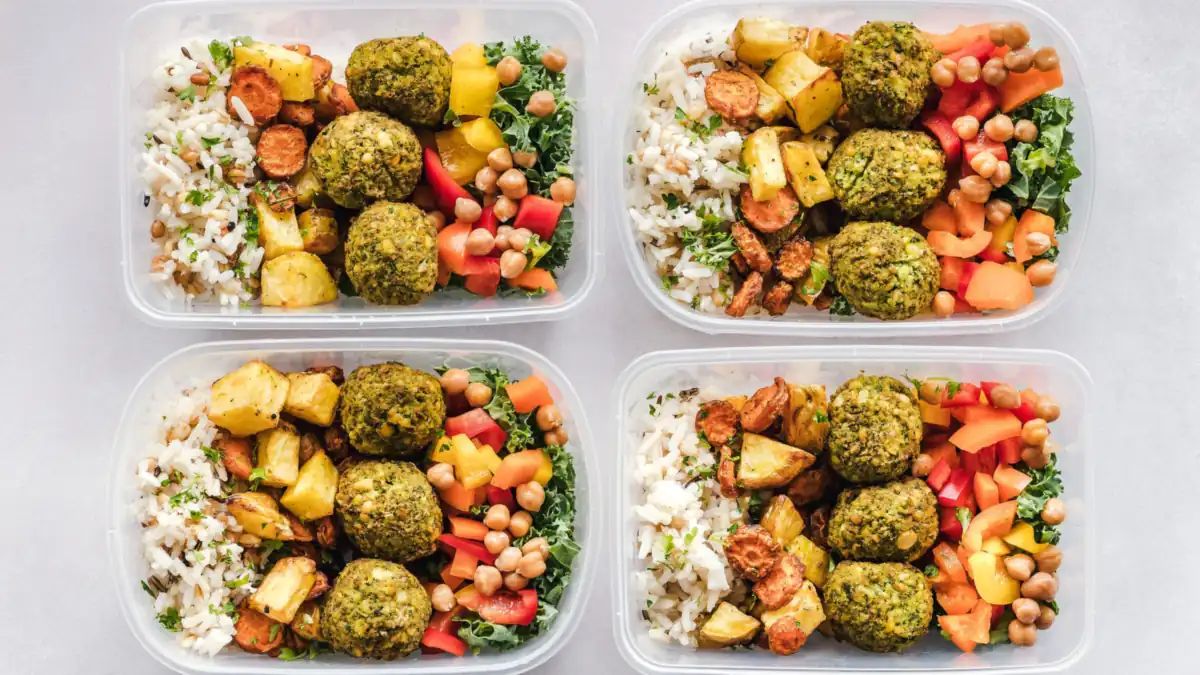
- Divide big batches into shallow containers so they chill evenly. A deep pot of chili can stay warm in the middle for hours.
- Leave lids slightly open for the first few minutes in the fridge if you like, then seal.
- Don't pack the fridge so tightly that cold air can't circulate.
Label each container with the dish and the date. Plan to eat refrigerated portions within three to four days. Anything meant for Thursday or Friday can go straight into the freezer instead. Our fridge food-safety guide has the full timelines.
Step 8: Clean as you go
By the time everything is packed, most of the cleanup should already be done. Wash bowls and boards during the gaps while things roast. The pots that held the chili or curry can soak while you pack.
A sample two-hour session
Here's how a real week fits together, with chicken and potatoes, turkey chili, rice, roasted broccoli and taco fixings:
- 0:00 Oven to 425°F. Rice in the rice cooker. Clear the counters.
- 0:10 Potatoes and chicken thighs on tray one, into the oven.
- 0:15 Dice onions and peppers for chili and tacos. Start the chili.
- 0:35 Cut broccoli for tray two. Shred lettuce and slice tomatoes for tacos; pack these separately.
- 0:45 Tray one out (check chicken for 165°F). Tray two in.
- 0:50 Brown taco meat. Simmer chili.
- 1:15 Everything off the heat. Start portioning into shallow containers.
- 1:30 Label, fridge and freezer. Wash the last pots.
That's five dinners: chicken and potatoes twice, chili twice (one frozen), and a taco night assembled fresh.
Common mistakes to avoid
- Picking five brand-new recipes. Use one or two you know well and add one new one at most.
- Prepping seven days ahead. Three to four days in the fridge is the limit, so freeze the second half of the week.
- Dressing everything in advance. Sauces, dressings and crunchy toppings go in a separate small container.
- Ignoring what reheats badly. Fried food, delicate fish and crisp salads don't hold up. Our list of dinners that reheat well can help you pick.
Frequently asked questions
Can I meal prep for seven days at once?
You can cook for seven days, but don't refrigerate it all. FoodSafety.gov recommends eating cooked leftovers within 3 to 4 days, so freeze anything planned for later in the week and thaw it in the fridge the night before.
Do I have to let food cool before refrigerating it?
No. Hot food can go straight into the fridge. Splitting it into shallow containers helps it cool quickly and evenly, and it should be refrigerated within 2 hours of cooking.
How many recipes should a beginner prep?
Two or three. Cook double batches of each and plan one assemble-fresh dinner. Add more variety once the routine feels easy.